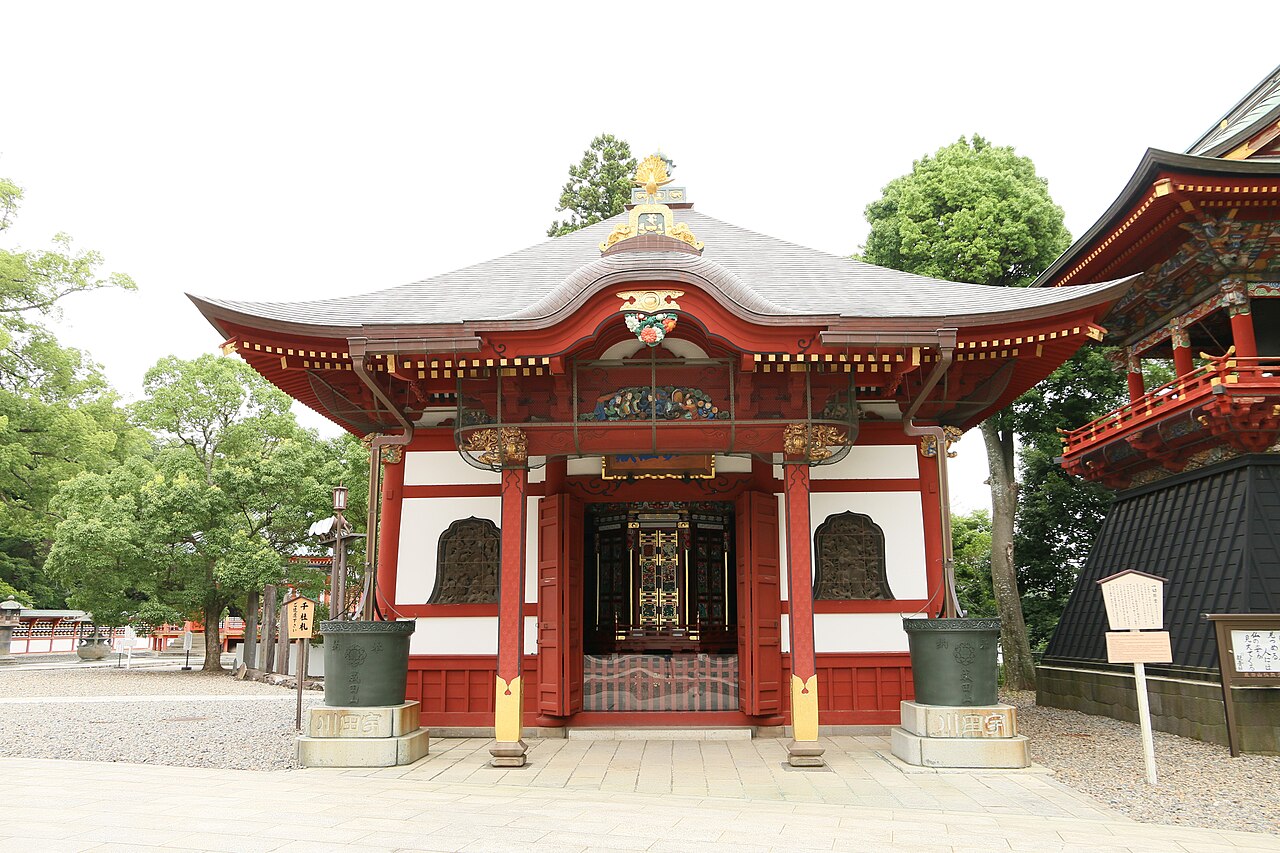
Naritasan Shinshoji is one of the great pilgrimage temples of eastern Japan, founded in 940 around a statue of Fudo Myoo, and it rewards the traveler who arrives early far more than the one who arrives at noon. The fire ritual that has been performed here daily for over a thousand years starts before most visitors have finished breakfast, the temple park behind the halls stays calm even on busy days, and the whole place sits ten minutes on foot from a station that is only a short hop from Narita Airport. If you have a long layover, or you want a day trip from Tokyo that ends with grilled eel on an old approach street, this is the one.
Getting there
- From Keisei-Ueno Station in Tokyo, the Keisei Main Line limited express reaches Keisei-Narita Station in about 65 minutes for 860 yen one way. On Keisei, the limited express is an ordinary commuter train: no seat reservation, no extra express fee, just tap in and board.
- By JR, the Sobu Line rapid service from Tokyo Station takes about 75 minutes to Narita Station; from Ueno via the Joban Line with a change at Abiko it is about 80 minutes.
- From Narita Airport, Keisei trains from Airport Terminal 2 station reach Keisei-Narita in about 8 minutes — which is why this temple is the classic layover excursion.
- From either Keisei-Narita or JR Narita Station, the temple is about a 10-minute walk downhill along the Omotesando approach street.
New to rural buses and one-man trains? See how to ride them, step by step.
Start with the goma, the fire ritual
The heart of a Naritasan visit is the goma, a fire ceremony in the main hall in which priests burn wooden prayer sticks before the image of Fudo Myoo while drums roll through the building. It is held every day, several times a day — roughly hourly from 9:00 in the morning into mid-afternoon, with the exact monthly timetable posted by the temple — and a sitting takes about 30 minutes. The first service of the day, the morning goma, begins at 5:30 a.m. from April to September and 6:00 a.m. from October to March.
That early service is the quiet traveler's ticket. Arrive for the morning goma and you will share a vast wooden hall with priests, a scattering of local regulars, and almost no one else; walk back out and the approach street is still shuttered and silent. Visitors may sit in on the ritual respectfully without booking anything.
The halls and the pagoda
The precinct climbs a low hill in layers, and the buildings reward slow looking. The Niomon guardian gate, in its present form dating to 1831, hangs a giant red lantern over the stairway and holds fierce guardian-king statues in its bays. The Great Main Hall above it is the stage for the goma. To its right stands a three-story pagoda whose present structure dates to 1803 — an unusually old survivor for the region — carved and painted in colors that have been carefully restored. Behind and above, further halls trail off into the trees, and the crowds thin with every flight of steps you climb.
Where to stay
Disclosure: This post may contain affiliate links. If you book through them, we may earn a commission at no extra cost to you.
Naritasan Park: the escape hatch
Behind the halls spreads Naritasan Park, 165,000 square meters of wooded slopes, ponds, and winding paths — the temple compares it to about three and a half Tokyo Domes. Even when the main hall is busy, ten minutes of walking puts you beside a quiet pond with turtles and carp. Plum blossoms come in late winter, wisteria in spring, and the maples turn late in autumn. Inside the park, the Naritasan Calligraphy Museum shows a serious collection of Japanese and Chinese calligraphy in a modern building by the pond; it opens 9:00 to 16:00 (entry until 15:30), closes on Mondays, and admission for adults is 500 yen.
Omotesando: eel and sweet shops
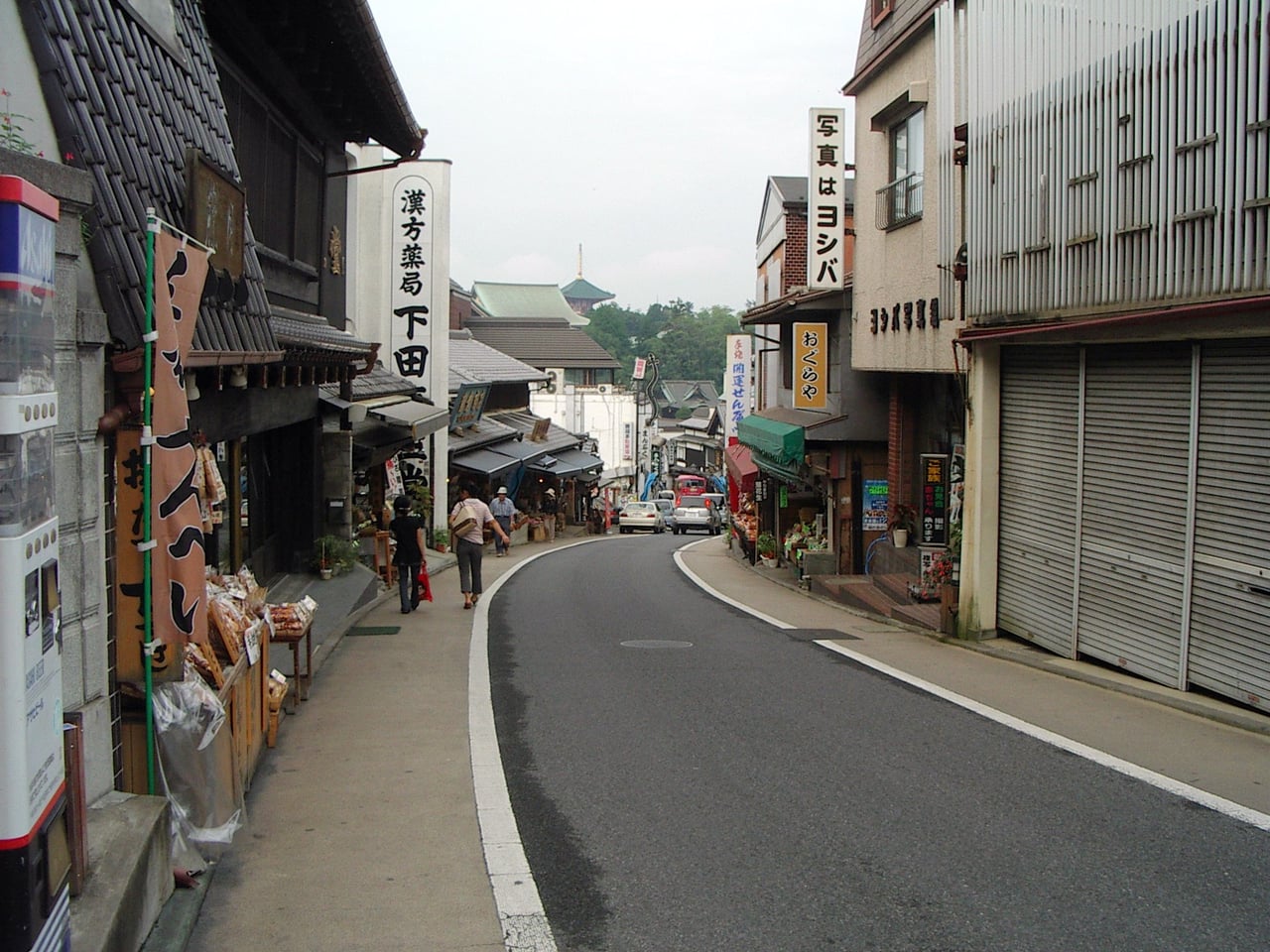
The approach street between the stations and the temple gate is a working pilgrimage street, not a reconstruction. Its signature dish is unagi — freshwater eel — and at the famous houses along the slope, such as Kawatoyo, you can watch the eel being filleted and grilled at the shopfront before you eat it. The street is also known for yokan, the dense sweet bean jelly; Yoneya, which grew up with the temple pilgrimage, sells the chestnut version that has been a Narita souvenir for generations. Eating an early unagi lunch after a morning at the temple, then drifting back toward the station, is the natural shape of the day.
How to keep it quiet
- Come on a weekday if you can, and come early: the morning goma hours are a different world from midday, when tour groups and school trips arrive.
- Avoid the New Year period entirely unless you want the opposite of quiet — Naritasan is one of Japan's most visited hatsumode (first shrine-and-temple visit) destinations, and the first days of January bring enormous crowds.
- Festival days, especially Setsubun in early February, also transform the temple; the goma timetable itself changes that day.
- The park is the pressure valve: whenever the halls feel busy, walk downhill behind the main hall and the noise falls away within minutes.
Honest notes
The temple precinct involves real stairs — from the gate up to the main hall and again up to the upper halls — so allow for a slow pace if steps are hard. Rainy days make the stone slopes slippery but also empty the place beautifully. Most shops on Omotesando close by early evening, so plan the eel for lunch, not dinner.
The essentials
- Keisei-Ueno to Keisei-Narita: about 65 minutes, 860 yen one way, no express surcharge; JR from Tokyo Station about 75 minutes.
- From Narita Airport (Terminal 2 station) about 8 minutes by Keisei — a realistic layover trip.
- Station to temple: about 10 minutes on foot.
- Goma fire ritual: daily, roughly hourly 9:00 to mid-afternoon; morning goma at 5:30 a.m. (April–September) or 6:00 a.m. (October–March); about 30 minutes.
- Temple park museum: adults 500 yen, 9:00–16:00, closed Mondays.
If you want to compare this with other quiet days out of Tokyo, see our roundup of quiet day trips from Tokyo without a car, or pair Narita with the little castle town of Kururi deeper into Chiba.
Compare options and book via our partner links: Naritasan temple-town tours and Narita-area experiences on GetYourGuide.