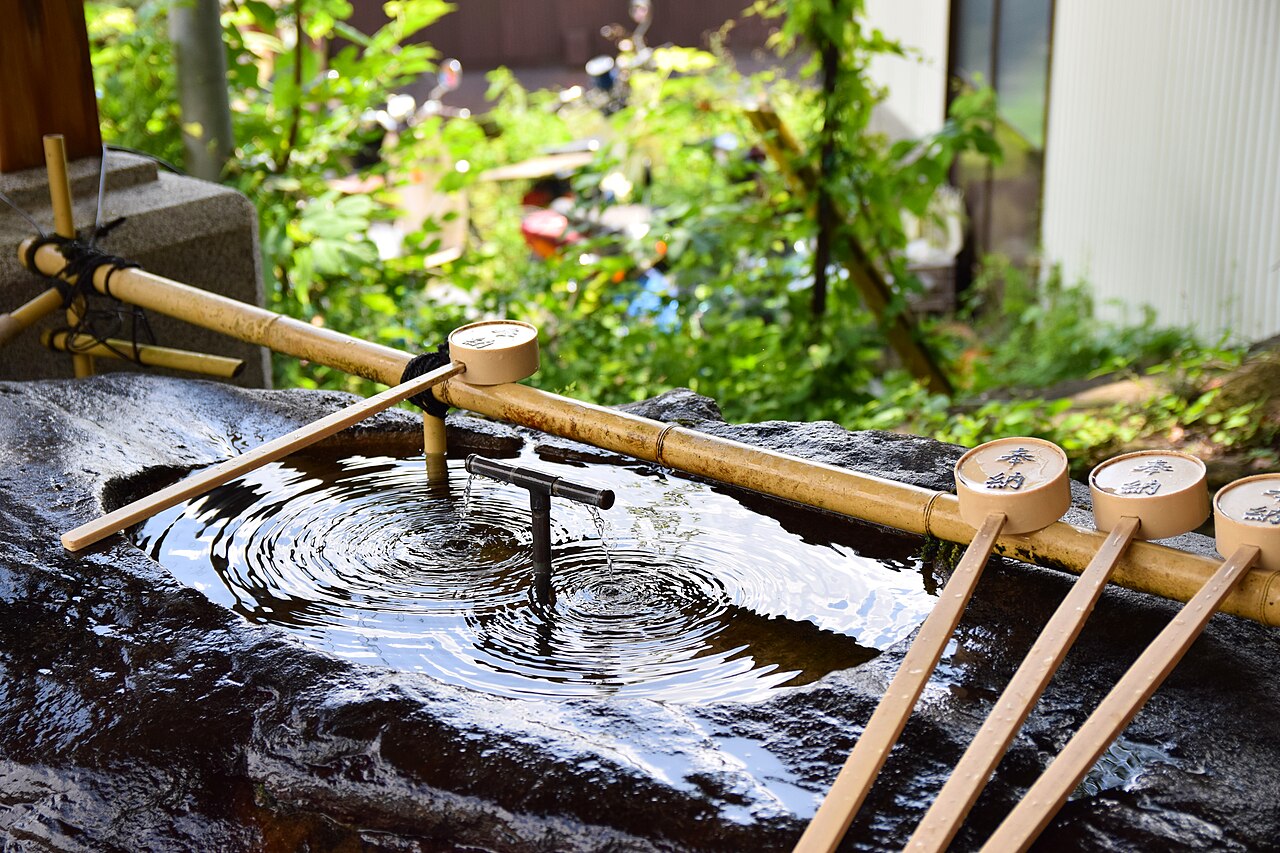
Mount Mitake is not an undiscovered corner — it has drawn pilgrims and hikers from the Tokyo area for centuries — but its appeal for the calm-minded traveler is something rarer than solitude: the hush of a living sacred village near a mountaintop. The houses clustered below the shrine gate belong almost entirely to hereditary shrine-priest and pilgrim-host families whose roots reach back to the Edo period, and walking their lanes in the early morning, woodsmoke drifting and the valley fog below, is as close as the Tokyo area comes to stepping into another century.
A sacred peak at the western edge of Tokyo
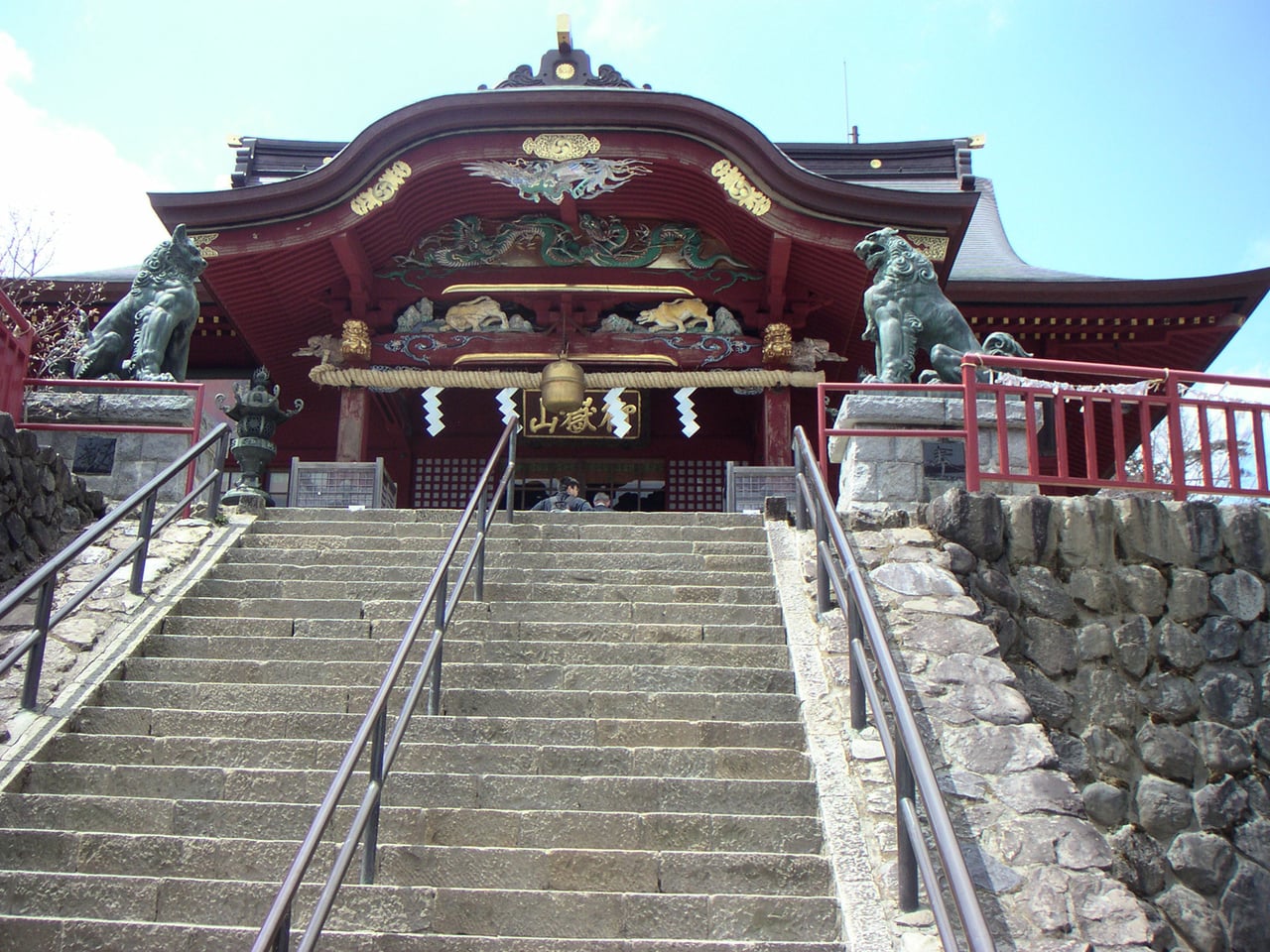
Musashi Mitake Shrine stands on Mount Mitake in Ome City, at the western edge of Tokyo, and has long been counted among the major mountain-worship sanctuaries ringing the Kanto Plain, alongside Oyama, Takao, Mitsumine, and Nikko. Though modest in height, the mountain is a conspicuous peak of the Okutama range, and its summit commands a wide view over the plain — older accounts even claimed the Boso Peninsula was visible from the top. The shrine buildings sit close to the summit, reached by a cedar-shaded approach once called the misty slope.
Reaching the summit
A cable car climbs from Takimoto Station at the base to Mitakesan Station near the summit in roughly six minutes; the adult round-trip fare is 1,200 yen and the child round-trip fare is 600 yen. From the top station, the village lanes and the shrine approach are a gentle walk — steep in stretches, but paved and short.
The oshi village
The community that gives Mitake its character is the oshi — hereditary pilgrim-host families who prayed for parishioners, lodged them, and guided them up the mountain. The settlement stabilized at around thirty-six households in the early eighteenth century, each house combining the roles of prayer master, festival officiant, guide, and inn for its own hereditary circle of parishioners; by the late 1970s, 27 households remained on the mountain with 7 more at the foot, down from around 60 at the start of the Edo period. From around 1950 the oshi families began running inns and guesthouses alongside their religious role, and their lodgings still take guests today — staying the night is the deepest version of the Mitake visit, with the mountain empty from the last cable car to the first.
From Zao Gongen worship to a Shinto shrine
Before the Meiji era the mountain was one of the great Kanto centers of worship of Zao Gongen, a syncretized Buddhist-Shinto mountain deity, claiming hundreds of thousands of parishioner households across the eight Kanto provinces as pilgrimage flourished along the Ome highway from Edo. The earliest reliable record is a 1256 foundation account by Onakatomi Kunikane, describing how he restored the ruined sanctuary, cast a bronze Zao Gongen image from unearthed copper, and built a new main hall. The shrine took its present name in 1874, having been known until then as Mitake Gongen, and its Buddhist aspect was erased at the Meiji separation of gods and buddhas, when temple objects recorded in the medieval accounts — including a bell donated in 1307 — were destroyed or scattered. The widely told origin chronicle, tracing the shrine into deep antiquity, was largely assembled by a shrine priest in the early nineteenth century to dignify that turn toward a purely Shinto identity — a reminder that on Mitake even the legends have a history.
Where to stay
Places to stay near Mount Mitake →
Disclosure: This post may contain affiliate links. If you book through them, we may earn a commission at no extra cost to you.
Shogunal patronage and warrior treasures
Tokugawa Ieyasu granted the shrine a thirty-koku vermilion-seal landholding in 1591, and in 1606 the shogunate rebuilt it under commissioner Okubo Nagayasu, turning the main hall from south-facing to east-facing so that it would spiritually guard Edo Castle. The shrine's treasury repays the climb: a red-laced great armor traditionally linked to the Kamakura warrior Hatakeyama Shigetada is a designated National Treasure, as is a Kamakura-period mother-of-pearl saddle set, and the tachi sword Hojumaru is an Important Cultural Property. In the Edo period the shrine's great annual rite was a warrior-procession festival carrying the Shigetada armor — identified with the present-day Hinode festival. The mountain is a literary landmark too: Nakazato Kaizan set the opening of his monumental novel Daibosatsu Toge here, and a stone monument to it stands quietly beside the Zuishinmon gate.
What a visit looks like
The classic circuit after paying respects at the shrine passes the Nagaodaira plateau, the Nanayo Falls, and the Tenguiwa crags with their large and small tengu statues, before returning to the oshi settlement — a loop of a few unhurried hours. On a clear day the summit frames the Chichibu range to the north, the Daibosatsu ridge to the west, and the Tama gorge below, with distant landmarks from Tsukuba to Tokyo Bay. The inner shrine on Kagoyama and the summit of Otake reward walkers who want a longer, emptier extension: few visitors make the added climb.
Precincts, talismans, and mountain waters
The shrine compound shelters numerous ancient trees, including the Jindai Keyaki, a sacred zelkova reputedly over 800 years old and a designated national natural monument. The shrine's signature amulet is the Okuchi Magami ofuda — a talisman of the sacred wolf deity, distributed by the tens of thousands each year, and the reason so many visitors now bring their dogs to be blessed. In the valley below the summit, the Ayahiro cascade has served for generations as a site of ascetic water purification, where week-long retreats led by shrine practitioners were still conducted in the modern era.
How to keep it quiet
- The traditional pilgrimage season opens on the eighth of March and the group-visit rhythm runs into early June: mid-morning arrivals, communal midday meals at oshi households, early-afternoon descents. Arrive before the groups or linger after them and the mountain empties.
- Most day visitors ride up, loop the shrine, and ride down. The village lanes below the gate, the falls circuit, and the inner-shrine paths stay calm even on busy days.
- Best of all: sleep in an oshi lodge. Between the last cable car and the first, the settlement returns to its own rhythms, and dawn at the shrine is yours.
For the wilder country one stop further down the line, see our guide to Okutama's gorges and limestone cave, or compare all our car-free escapes in the quiet day trips from Tokyo roundup.
Compare options and book via our partner links: Mount Mitake and Okutama guided day tours on GetYourGuide.